



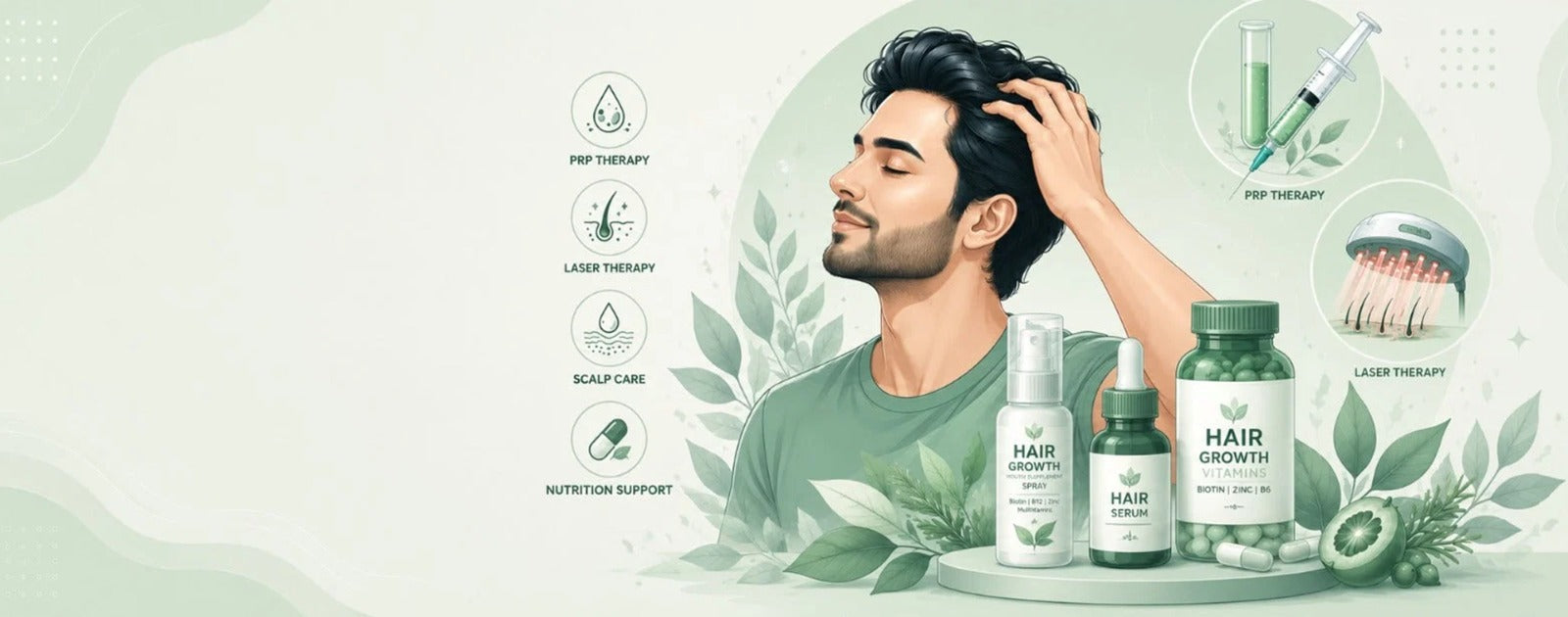
Hair Transplant Alternatives in India: From PRP to Hair Growth Vitamins — What Actually Works?
Hair loss has become one of the most common concerns among Indian men and women. With social media filled with dramatic before-and-after transplant photos and clinics promising permanent solutions, many people assume surgery is the only answer.
But here's what many don't realise:
A hair transplant should rarely be the first step.
Before considering an invasive procedure, it's essential to understand why you're losing hair in the first place. In many cases, addressing the underlying cause can significantly improve hair health and may reduce the progression of hair loss.
Step One: Find the Root Cause Before Treating the Hair
Hair loss is a symptom—not a diagnosis.
Several factors can contribute to excessive hair fall, including:
- Genetic (androgenetic alopecia)
- Iron deficiency
- Vitamin D deficiency
- Biotin deficiency
- Poor protein intake
- Zinc deficiency
- Thyroid disorders
- Hormonal imbalance
- Chronic stress
- Poor sleep
- Certain medications
A qualified dermatologist may recommend blood investigations before deciding on the most appropriate treatment plan.
Correcting an underlying nutritional deficiency is often one of the simplest and most cost-effective interventions available.
Vitamin & Mineral Deficiency: The Most Overlooked Cause of Hair Loss
Hair follicles are among the fastest-growing tissues in the body.
To continuously produce healthy hair, they require an adequate supply of nutrients every single day.
Common deficiencies associated with increased hair shedding include:
- Vitamin D
- Iron
- Zinc
- Biotin
- Vitamin B12
- Folate
- Protein
These deficiencies can often be identified through laboratory testing and addressed through dietary changes or supplementation under professional guidance.
Compared with advanced procedures, nutritional correction is generally inexpensive, non-invasive and easy to maintain.
Hair Restoration Pyramid
Instead of thinking about hair treatments individually, think of them as layers.
Foundation
- Balanced nutrition
- Vitamin & mineral optimisation
- Adequate protein intake
- Good sleep
- Stress management
Medical Therapy
- Minoxidil
- Prescription treatments where appropriate
Regenerative Procedures
- PRP
- Microneedling
- Low-Level Laser Therapy
Surgical Restoration
- Hair Transplant
A strong foundation improves the environment in which all other therapies work.
Why Nutrition Is Essential for Hair Growth
Hair is made primarily of keratin, a structural protein.
Producing healthy hair requires:
- Continuous cell division
- Protein synthesis
- Collagen support
- Cellular energy production
- Antioxidant protection
- Balanced nutrition
- Vitamin & mineral optimisation
- Adequate protein intake
- Good sleep
- Stress management
Medical Therapy
- Minoxidil
- Prescription treatments where appropriate
Regenerative Procedures
- PRP
- Microneedling
- Low-Level Laser Therapy
Surgical Restoration
- Hair Transplant
A strong foundation improves the environment in which all other therapies work.
Why Nutrition Is Essential for Hair Growth
Hair is made primarily of keratin, a structural protein.
Producing healthy hair requires:
- Continuous cell division
- Protein synthesis
- Collagen support
- Cellular energy production
- Antioxidant protection
Nutrients such as Biotin, Pantothenic Acid, Vitamin C and Vitamin D contribute to normal metabolic functions that support healthy hair growth. Without adequate nutritional support, hair follicles may struggle to maintain their normal growth cycle.
Minoxidil + Nutrition: A Powerful Combination
One of the most effective non-surgical strategies is combining topical Minoxidil with nutritional support.
Minoxidil works on the follicle.
It helps:
- Prolong the growth (anagen) phase
- e Increase blood flow around follicles
- Support thicker hair shafts
- Slow follicle miniaturisation in suitable individuals
Nutrition works inside the follicle.
Essential nutrients help support:
- Keratin production
- Cellular metabolism
- Collagen formation
- Antioxidant defence
- Healthy follicle function
Think of Minoxidil as improving the irrigation to a farm.
Nutrition supplies the seeds, fertiliser and building materials needed for healthy crops.
Both work together—and neither replaces the other.
Stress: The Hidden Trigger for Hair Fall
Stress is one of the most underestimated contributors to hair shedding.
Physical illness, emotional stress, poor sleep, anxiety and burnout can push a greater number of hair follicles into the resting (telogen) phase, leading to increased shedding several weeks later.
Managing stress is therefore an important part of long-term hair care.
Helpful strategies include:
- Regular exercise
- Meditation
- Adequate sleep
- Yoga
- Mindfulness
- Professional counselling when needed
Can Nutrition Support Mental Wellbeing Too?
Several nutrients play recognised roles in normal nervous system function and energy metabolism.
For example:
- Vitamin D contributes to normal immune function and overall health.
- B vitamins support normal energy-yielding metabolism and nervous system function.
- Vitamin C contributes to normal psychological function and helps reduce oxidative stress.
While supplements are not a treatment for anxiety, depression or other mental health conditions, correcting nutritional deficiencies may support overall wellbeing as part of a healthy lifestyle. Anyone experiencing persistent mental health concerns should seek advice from a qualified healthcare professional.
Not All Supplements Are Created Equal
Choosing the right ingredients is only part of the equation.
Delivery matters too.
Traditional tablets rely on digestion before nutrients become available for absorption.
Sublingual vitamin sprays are designed to begin absorption through the tissues under the tongue before the remainder is swallowed.
They also offer practical lifestyle advantages:
- No water required
- Easy daily use
- Portable
- Convenient for travel
- Suitable for people who dislike swallowing tablets
For many consumers, this makes them easier to use consistently—and consistency is one of the most important factors in any nutritional programme.
Why Nutrispray Hair?
- Biotin
- Pantothenic Acid
- Vitamin C
- Vitamin D3
in an innovative sublingual vitamin spray designed for everyday use.
It is intended to complement healthy eating, stress management and dermatologist-recommended treatments such as Minoxidil—not replace them.
Which Hair Loss Treatment Is Right for You?
Every person is different.
The best results often come from a personalised approach that combines:
- Root cause analysis
- ✓ Nutritional optimisation
- Stress management
- Topical Minoxidil where appropriate
- Healthy lifestyle habits
- Advanced procedures only when clinically indicated
Hair transplantation can restore hair in selected individuals—but long-term hair health depends on much more than surgery.
Healthy follicles need the right environment to thrive, and that begins from within.
Frequently Asked Questions
Should I get a hair transplant immediately?
Not necessarily. A medical evaluation to identify underlying causes such as nutritional deficiencies, hormonal disorders or stress is often recommended before considering surgery.
Can vitamin deficiencies cause hair loss?
Yes. Deficiencies in nutrients such as Vitamin D, iron, zinc and biotin may contribute to increased hair shedding in some individuals.
Is Minoxidil enough on its own?
Minoxidil is a well-established treatment for certain types of hair loss, but combining it with nutritional support, good scalp care and healthy lifestyle habits may provide a more comprehensive approach.
Are sublingual vitamin sprays better than tablets?
Sublingual sprays use a different delivery route and are designed to begin absorption through the tissues under the tongue. They also offer convenience and ease of daily use.
Can stress really cause hair fall?
Yes. Significant physical or emotional stress can trigger telogen effluvium, a condition in which more hairs enter the shedding phase than usual.
Final Thoughts
Successful hair restoration isn't about choosing one miracle treatment. It's about addressing the problem from every angle. When you identify the root cause, optimise your nutrition, manage stress and combine evidence-based treatments such as Minoxidil with consistent nutritional support, you create the best possible environment for healthier hair over the long term. Before you think about replacing lost hair, give your existing hair every opportunity to thrive.
Share:
Non-Surgical Hair Regrowth: Can Vitamins and Nutrition Really Help?
Best Anti-Ageing Beauty Supplements in India: What Actually Works for Indian Skin?